Japan’s Top Brokers to Offer Bitcoin, Ethereum Trusts
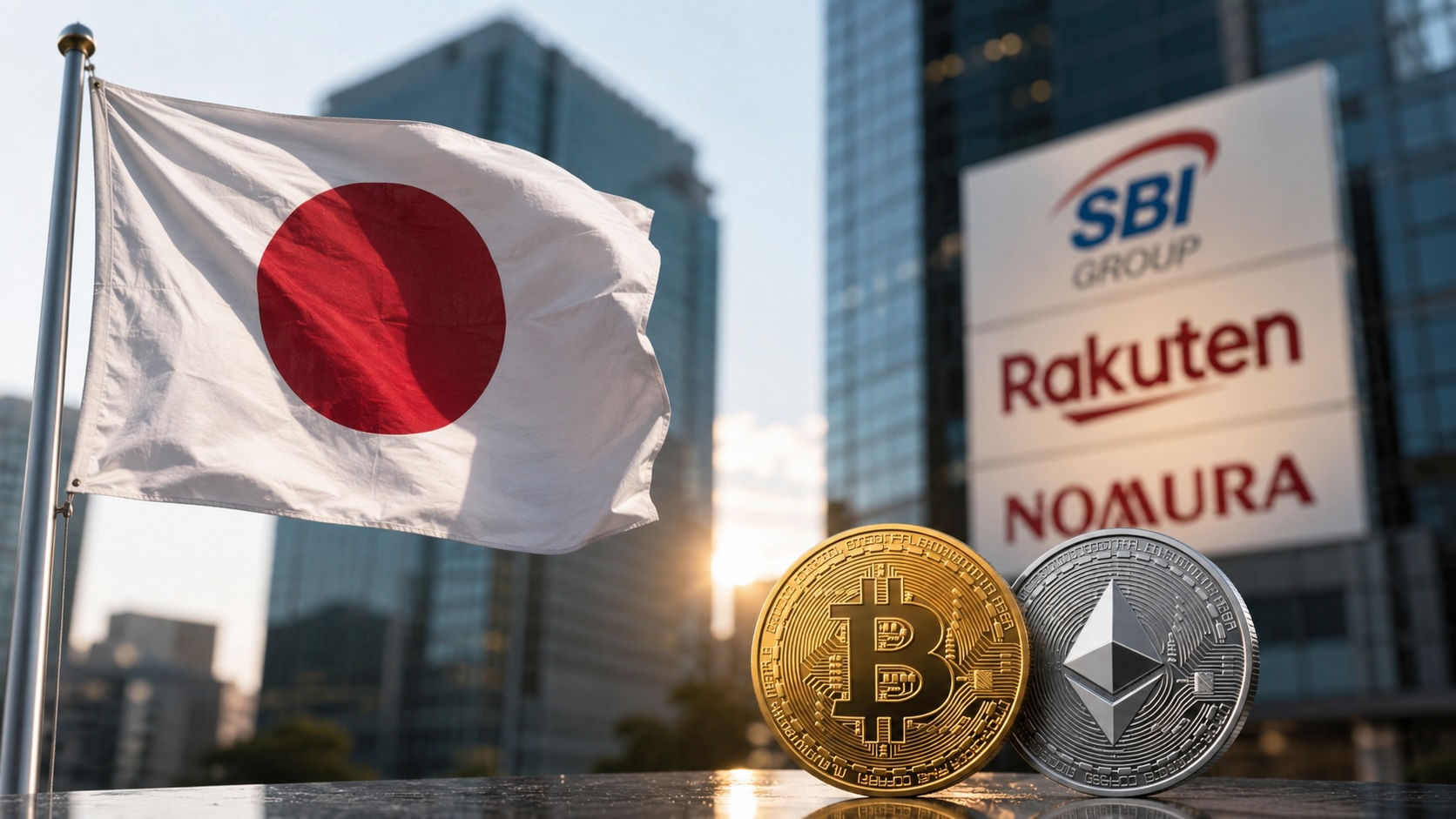
SBI Securities and Rakuten Securities will sell in-house Bitcoin and Ethereum investment trusts to retail clients through existing brokerage accounts.
SBI Securities and Rakuten Securities will offer in-house investment trusts holding Bitcoin and Ethereum that retail customers can buy through their existing brokerage accounts. The trusts will let investors purchase fund units that track the cryptocurrencies instead of buying and storing coins directly.
SBI Securities plans to distribute products developed by its group unit, SBI Global Asset Management. That unit is targeting roughly ¥5 trillion (about $32 billion) in assets within three years and intends to handle product design, custody and distribution internally.
Rakuten Securities is preparing similar trusts through Rakuten Investment Management and aims to allow customers to trade the funds directly inside its smartphone apps. Both brokerages operate licensed cryptocurrency exchanges, providing existing infrastructure and regulatory relationships for the new products.
Japan’s Financial Services Agency is considering rules that would permit investment trusts and exchange-traded funds to hold crypto under the Investment Trust Act. Regulators could clear spot crypto ETFs by 2028. Some analysts estimate the domestic market for such products could reach about $6.4 billion.
A recent survey of 18 financial firms found 11 would consider launching crypto trusts once the regulatory framework is finalized. Major financial groups have taken preparatory steps: Nomura and Daiwa have signaled plans to develop similar products after rules are clarified, SMBC Group has formed a task force, and Asset Management One at Mizuho has begun early research.
Japanese regulators recently reclassified crypto as a financial instrument, introducing annual disclosure requirements and insider trading restrictions that align digital assets more closely with regulated securities. Custody and reporting for the proposed trusts would be handled by regulated financial groups.
For retail investors, the trusts would remove the need to open separate exchange accounts or manage private wallets. Investors who hold accounts at SBI or Rakuten could add Bitcoin or Ethereum exposure inside familiar brokerage systems.
Unit holders would not own the underlying crypto directly. The trusts will charge management fees and create counterparty risk that do not exist with direct coin ownership. In the United States, competition among ETF issuers reduced fees and helped funds attract large asset inflows after spot Bitcoin ETFs launched in early 2024. Hong Kong launched Bitcoin and Ethereum products soon after those U.S. funds appeared.
SBI and Rakuten have not finalized product details such as fee levels or custody providers. Regulatory approval and the firms’ pricing and custody arrangements will determine the specific features available to retail investors.
Tags
Articles by this author