CBDC vs stablecoin

Learn the main cbdc vs stablecoin differences, including how they are issued, controlled, used, and built for the future of digital money.
Digital money is no longer a single idea. It now includes private crypto-based tokens, bank-issued payment tools, tokenized deposits, and central bank digital currencies. Two of the most discussed models are stablecoins and CBDCs. Both aim to make money easier to use in digital environments, but they are built on different foundations.
Stablecoins usually come from private companies or decentralized protocols. CBDCs come from central banks. Stablecoins often serve crypto markets, cross-border payments, trading, and on-chain finance. CBDCs are designed as public money in digital form, potentially used for retail payments, wholesale settlement, or national payment infrastructure.
Understanding the difference matters because both could shape how people, businesses, banks, fintech platforms, and governments handle value online.
What are stablecoins?
To understand stablecoin meaning, it helps to start with the basic problem they try to solve. Most cryptocurrencies are volatile. Bitcoin, Ether, and many other digital assets can move sharply in price within a single day. That makes them useful for investment and trading, but harder to use as everyday money.
Stablecoins are digital tokens designed to maintain a stable value, usually by tracking the price of a fiat currency such as the U.S. dollar or the euro. A dollar-backed stablecoin aims to stay close to $1. In practice, users can send, receive, trade, lend, or hold this token while avoiding the price swings common in other crypto assets.

Most major stablecoins maintain their value through reserves. A stablecoin issuer may hold cash, short-term government debt, bank deposits, or other liquid assets to support the tokens in circulation. If one token is supposed to equal one dollar, the issuer is expected to hold enough assets to meet redemptions. When users redeem stablecoins, they should be able to exchange them for the underlying fiat value, subject to the issuer’s rules and available access.
There are several stablecoin models. Fiat-backed stablecoins rely on traditional reserves. Crypto-backed stablecoins use digital assets as collateral, usually with overcollateralization to absorb market swings. Algorithmic stablecoins try to maintain their peg through supply adjustments or incentive mechanisms, though this model has proven risky in several past failures.
Stablecoins are widely used because they combine some features of traditional money with blockchain-based transferability. They can move across crypto exchanges, wallets, decentralized finance applications, and payment networks. For users in countries with unstable currencies or limited banking access, dollar-linked stablecoins may also serve as an informal digital dollar tool.
Their main weakness is trust. A stablecoin depends on the quality of its reserves, the reliability of the issuer, redemption access, transparency, regulation, and the security of the blockchain infrastructure it uses.
CBDCs explained
So, what is CBDC? A central bank digital currency is digital money issued directly by a central bank. It represents official state-backed money in digital form. Unlike a stablecoin, which is usually a private token pegged to fiat currency, a CBDC would be a direct liability of the central bank or part of a central bank-controlled monetary system.
CBDCs can be designed for different purposes. A retail CBDC would be used by individuals and businesses for everyday payments. A wholesale CBDC would be used mainly by banks, financial institutions, and payment operators for settlement. Some countries are exploring CBDCs to modernize payment systems, reduce cash dependency, improve financial inclusion, or make cross-border payments more efficient.

The structure can vary. In one model, the central bank provides the core digital money infrastructure while commercial banks and payment companies manage user-facing services. In another model, citizens may hold CBDC accounts or wallets more directly connected to the central bank. Many proposals use a two-tier structure to avoid removing banks from the financial system.
CBDCs do not need to use public blockchains. Some may use distributed ledger technology, but others may rely on centralized databases or permissioned networks. The central point is not the technology itself, but the issuer: a CBDC is created and controlled by a central bank.
CBDCs could offer certain benefits. They may provide a digital form of public money, improve payment resilience, reduce settlement friction, and support programmable features under strict rules. However, they also raise concerns around privacy, state control, cybersecurity, financial surveillance, and the possible impact on commercial banks if users move deposits into central bank money.
Because of these trade-offs, CBDC development is often cautious. Central banks need to balance innovation with monetary stability, public trust, privacy safeguards, and the existing banking system.
Stablecoins vs CBDCs
The stablecoin vs CBDC comparison starts with issuance. Stablecoins are issued by private companies, crypto protocols, or financial institutions. CBDCs are issued by central banks. This difference shapes almost everything else: trust, control, regulation, design, access, and risk.
Control is another major distinction. Stablecoins are controlled by their issuers and by the rules of the blockchain networks they run on. Some issuers can freeze tokens, blacklist addresses, or change terms under legal or operational pressure. Decentralized stablecoins may reduce issuer control, but they introduce protocol and collateral risks.
CBDCs would likely operate under public-sector rules. A central bank or authorized intermediaries would define how the system works, who can access it, what data is collected, and how transactions are settled. This could make CBDCs more stable from a monetary perspective, but also more sensitive from a privacy and civil liberties perspective.

Use cases also differ. Stablecoins are already common in crypto trading, DeFi, remittances, cross-border payments, and dollar-based digital settlement. They are useful where users want fast blockchain transfers and access to tokenized dollars. CBDCs are more likely to focus on national payment systems, public money access, bank settlement, government payments, and regulated financial infrastructure.
Technology is not a simple dividing line. Stablecoins usually run on public blockchains such as Ethereum, Tron, Solana, or other networks. This allows open wallet access, integration with decentralized applications, and global transferability. CBDCs may use permissioned ledgers, centralized systems, or hybrid architecture. They may not be open in the same way public blockchain tokens are.
Risk profiles are different too. Stablecoin risks include reserve quality, issuer solvency, depegging, smart contract vulnerabilities, regulatory action, and blockchain congestion or exploits. CBDC risks include system design failures, cyberattacks, privacy concerns, political misuse, and disruption to bank deposits.
There is also a philosophical difference. Stablecoins are market-driven tools. They emerged from crypto users’ demand for stable on-chain value. CBDCs are policy-driven tools. They come from central banks trying to adapt public money to a digital economy.
Final verdict
The main CBDC vs stablecoin differences come down to issuer, control, purpose, and infrastructure. Stablecoins are privately issued or protocol-based digital tokens designed to track fiat value. CBDCs are central bank-issued digital money designed to function as official public money in digital form.
Stablecoins are already active in global crypto markets and digital payments. They are flexible, fast, and easy to integrate into blockchain applications, but they depend on reserve trust, issuer behavior, and regulatory treatment. CBDCs could offer a safer form of digital public money, but their success depends on careful design, privacy protection, user adoption, and coordination with the banking system.
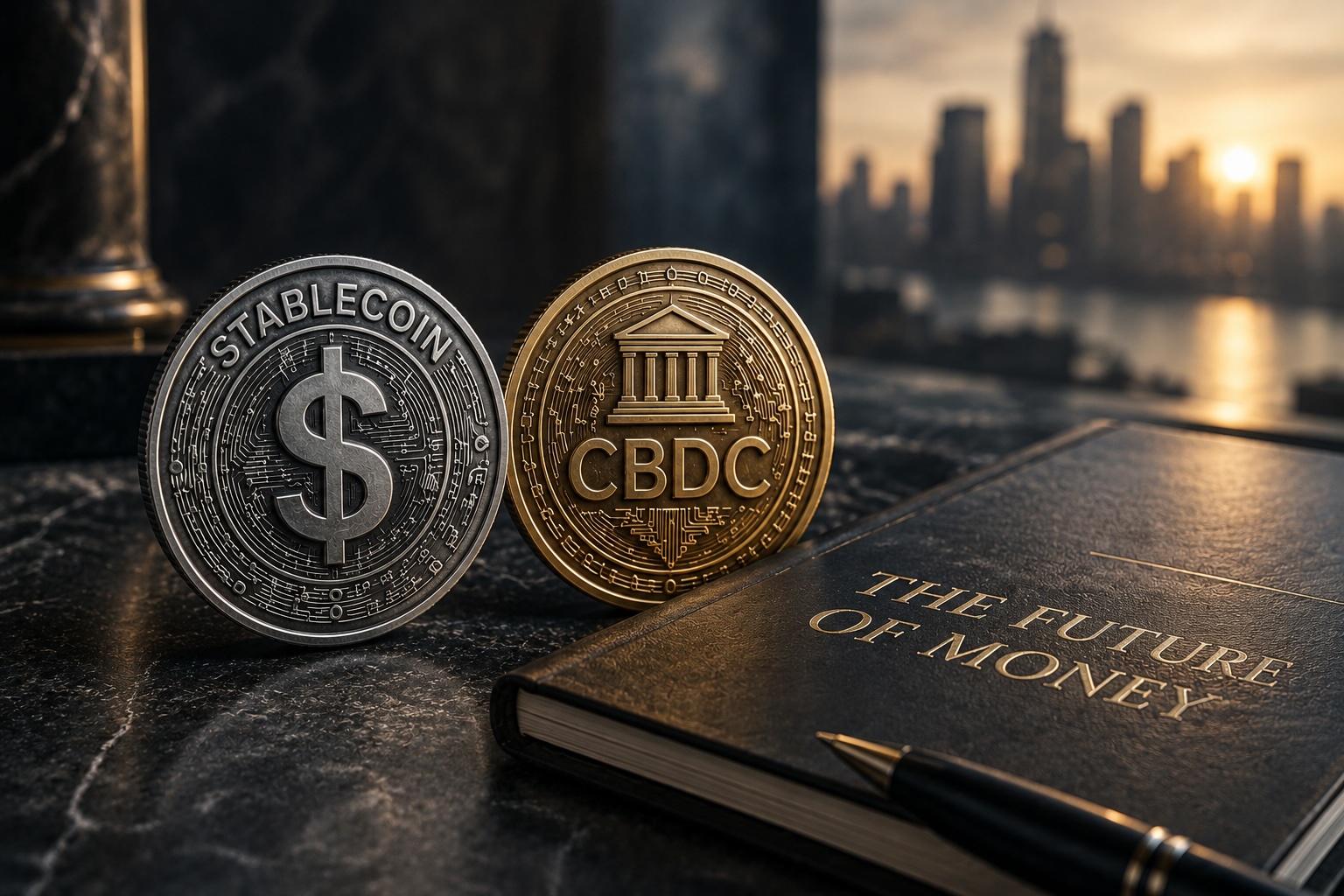
The future may not belong to only one model. Stablecoins could continue serving crypto-native finance, cross-border settlement, and private-sector payment innovation. CBDCs could support national payment systems, wholesale settlement, and public digital money infrastructure. Tokenized deposits may also sit between the two, giving banks a larger role in digital cash-like payments.
In the broader future of digital money, stablecoins and CBDCs may compete in some areas and complement each other in others. Stablecoins show how quickly private digital money can scale when users need speed and global access. CBDCs show how central banks are thinking about the next version of public money. The real question is not only which one is better, but which design gives users the best balance of stability, openness, privacy, safety, and practical utility.
Articles by this author