ZachXBT: Dedicated iPhone May Be Safer Than Hardware Wallet
ZachXBT argued a dedicated iPhone can reduce signing attacks with a hardened OS, app sandboxing and a larger display, citing the $1.5 billion Bybit and $50 million Radiant Capital thefts.
Security researcher ZachXBT argued that a dedicated iPhone can offer better protection than a traditional crypto hardware wallet because its hardened operating system, app sandboxing and larger display may reduce signing-based attacks. The claim cites two recent high-value thefts in which altered on-screen information led to legitimate signatures for harmful transactions.
Both hardware wallets and smartphones function as signing devices. The core risk identified in recent incidents is what a valid signature allows the counterparty to do. In the Bybit incident, attackers presented altered screens to signers and obtained approvals for transfers the users believed were routine, resulting in roughly $1.5 billion stolen. Developers at Radiant Capital signed a malicious transaction during a normal-looking workflow and lost about $50 million several months earlier.
Hardware wallets are designed to isolate private keys from internet-connected computers to prevent key extraction. Chainalysis counted about 158,000 individual wallet compromises in 2025, affecting roughly 80,000 victims and resulting in $713 million in reported losses. Those figures include a range of attack types and indicate that isolating a key does not by itself prevent all losses when a signature is misapplied.
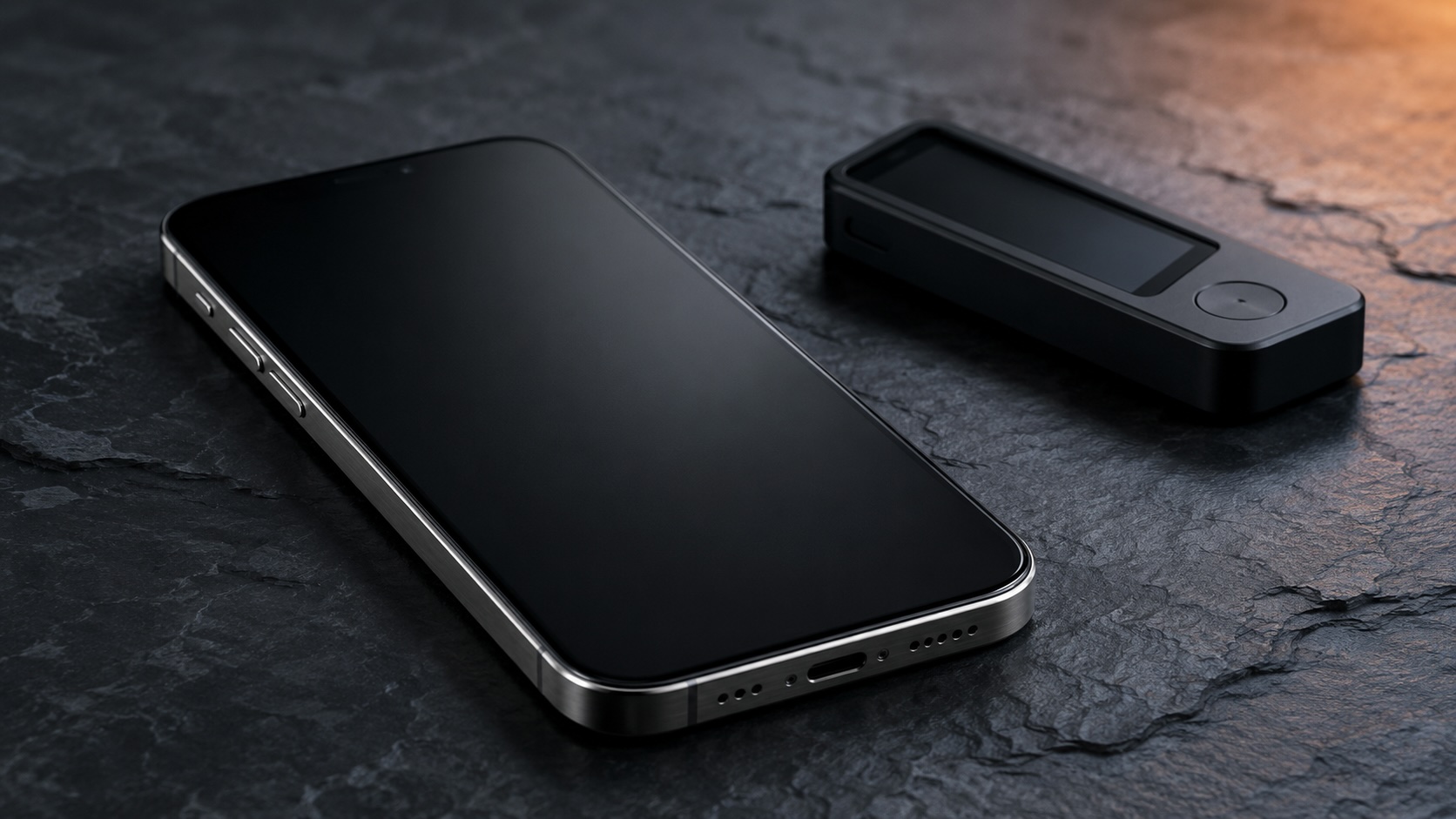
Advocates for a dedicated iPhone point to a stronger OS, biometric locks, app sandboxing and a larger screen that can display more transaction detail than small wallet displays. A separate iPhone can also be kept apart from a user’s main email, messaging and browser activity. Implementation limits remain. Apple’s Secure Enclave uses NIST P-256 key pairs, while Bitcoin and Ethereum commonly use secp256k1, so many wallet apps use the Secure Enclave to guard access to encrypted wallet material while the signature is produced elsewhere in the software stack. App-store review has not prevented malicious apps: a fake Ledger application that bypassed Mac App Store checks was linked to over $9.5 million in thefts from more than 50 victims in April 2026.
Industry work aims to make a valid signature less like an all-or-nothing authorization. ERC-7730 provides machine-readable instructions that translate raw contract calls into plain language, turning opaque hashes into descriptions of assets and permissions. Ledger helped develop that standard and has transferred its governance to the Ethereum Foundation. Security firm Trail of Bits has proposed adding policy controls to smart contract wallets, including daily spending limits, allowlisted destinations, withdrawal delays for large transfers, separate keys for spending versus policy changes, and emergency cancellation windows.
Products for organizations simulate and flag risky transactions before signing. Chainalysis’s Hexagate runs pre-signing simulations that check transactions against an organization’s policy. One policy example caps daily transfers at $100,000 to approved addresses and adds a 24-hour delay for larger withdrawals; vendors say such controls can reduce the realistic loss from a compromised key if an attempt is detected in time.
Bitcoin security specialist Jameson Lopp continues to recommend dedicated hardware for cold storage where keeping a key offline limits remote extraction risk. Developers and security teams are treating cold storage and active transaction signing as separate security problems that require different tools and procedures.
The debate centers on whether clearer signing displays and stronger device isolation or built-in policy limits will better prevent large thefts when users approve transactions.
Articles by this author