30-Year Treasury Yield Tops 5% for First Time Since 2007
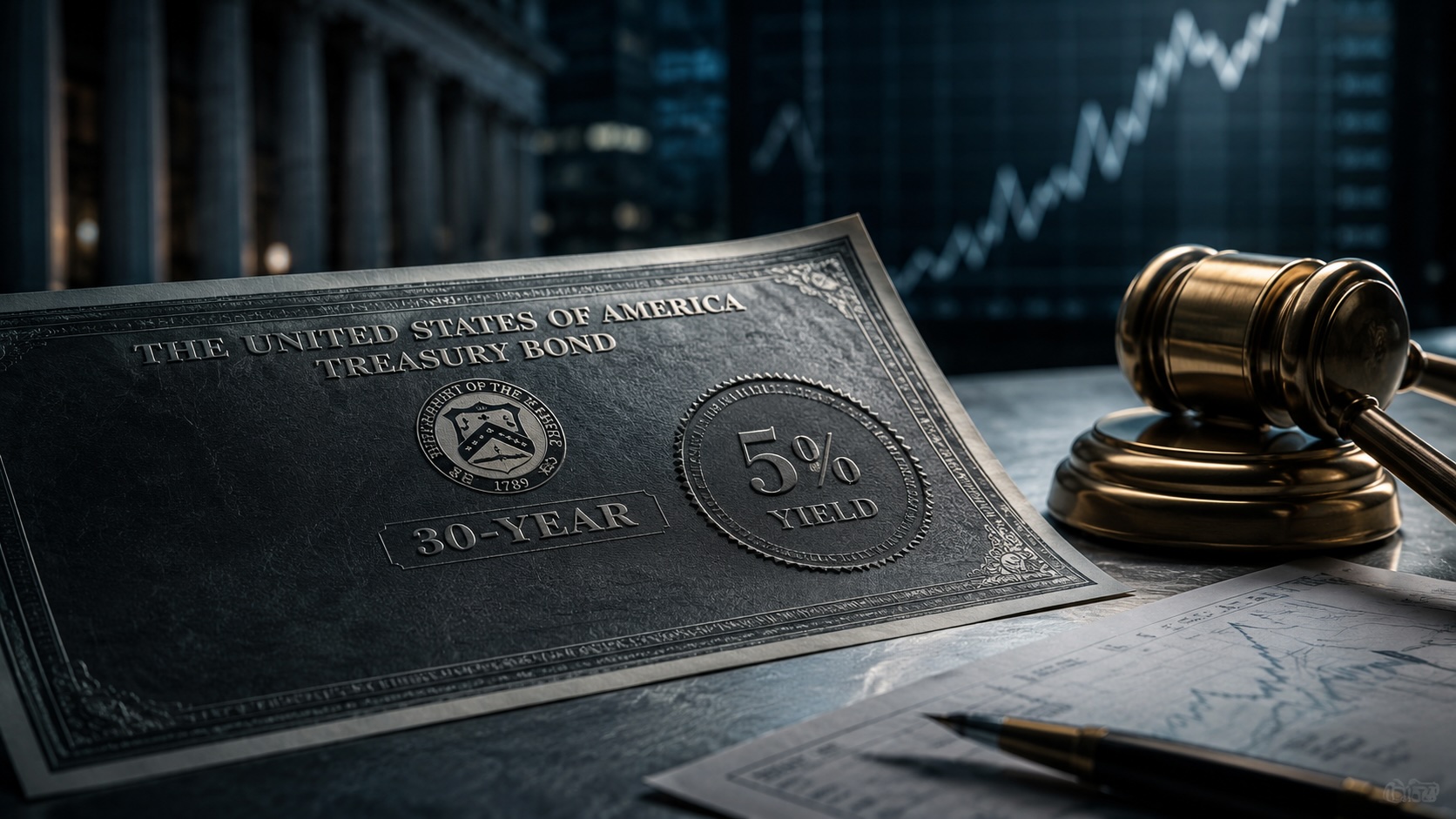
The U.S. Treasury sold $25 billion of 30-year bonds Wednesday, clearing at a 5.046% yield — the highest 30-year rate since 2007.
The U.S. Treasury sold $25 billion of 30-year bonds on Wednesday, and the auction cleared at a 5.046% yield, the highest 30-year rate recorded since 2007.
Market participants pointed to recent inflation data and heightened price pressures linked to the U.S.-Iran conflict as factors behind higher long-term yields. The Labor Department’s producer price index for final demand rose 6%, the largest year-over-year advance since January 2023, highlighting wholesale inflation pressures.
In secondary trading, the 30-year Treasury reached an intraday high near 5.05%, the strongest level since mid-July. The 10-year benchmark climbed to about 4.49%, while the 2-year yield, which is more sensitive to expectations for Federal Reserve policy, eased to roughly 3.981%.
Higher long-term Treasury yields raise borrowing costs for consumers and businesses because many loans and corporate bonds reference Treasury rates when setting interest. A 30-year yield above 5% increases the return available on long-dated government debt relative to non-yielding assets such as bitcoin and gold.
Market-implied probabilities currently place about a 55% chance of at least one Federal Reserve rate increase by April 2027. Traders and investors are watching upcoming inflation reports and Federal Reserve communications for signals on the path of interest rates and future Treasury supply and demand.
The auction cleared amid reports of tighter financial conditions across markets, with some investors seeking higher compensation to hold long-duration government debt.
Tags
Articles by this author